October 9th, 2019

The stereotypical braces wearer – in middle school, with a mouth full of metal brackets – has led to numerous myths about orthodontics that discourage many people from getting the dental care they need. Dr. Karen Seder and our staff would like to put some of these myths to rest.
Myth 1: Orthodontic treatment is for kids. Although teenagers often visit the orthodontist to get braces, adults represent a growing proportion of orthodontic patients. Whether you’re eight or 80, a consultation with an orthodontist can identify problems with your teeth, jaws, or bite that can be corrected by orthodontic interventions.
Myth 2: Traditional, metal braces are my only option. Advances in orthodontic technology have rendered improved braces and other orthodontic appliances that are much less noticeable than the braces of yesteryear. Ask Dr. Karen Seder about Invisalign® braces and other options that make sense for your situation.
Myth 3: Orthodontic treatment is only helpful for crooked teeth. Sure, a crooked smile is a common reason that patients seek orthodontic care. However, orthodontic interventions help with a range of dental health problems. From missing teeth to overbite to jaw misalignment, your orthodontist can help with many problems associated with the teeth, gums, and jaws.
Myth 4: Orthodontic treatment is too expensive. As with any medical procedure, orthodontics can be pricey. However, our Chicago, IL team works with patients to find payment plans, insurance coverage, or other payment options that reduce the financial burden.
October 2nd, 2019

Although teeth seem to be solidly fixed in their sockets (at least they don’t wobble when we chew!), all teeth can easily be moved if Dr. Karen Seder and our staff attach brackets and wires to them called braces. In the past, all braces were made of stainless steel, but today’s advanced dental technology gives people the option of wearing transparent, acrylic mouth trays called Invisalign®, or relying on traditional metal braces for correcting malocclusions.
Brackets, Slots, and Arch Wires – Oh My!
When light pressure is consistently exerted on teeth, they will gradually move in the direction of the force. For example, affixing brackets to front teeth and threading a flexible, metal wire through tiny slots on the front of the brackets allows the orthodontist to tighten this arch wire enough to initiate desired movement of teeth. Generally, orthodontic patients visit Seder Orthodontics once a month to have this wire tightened to keep teeth moving in the desired direction.
Tissues surrounding the teeth that experience pressure from arch wires will slowly (and, for the most part, painlessly) stretch, and allow the socket to enlarge so the tooth and its root become looser temporarily. This allows the root to move without causing bleeding or pain. Once Dr. Karen Seder and our staff are satisfied with the repositioning of teeth, we will remove the braces and let bone material fill in the socket so that teeth are solidified into their new (and straighter) positions.
Clear Braces vs. Traditional Braces
Both types of orthodontic corrective devices move teeth in the same manner: by applying a continual force against teeth. Clear aligners, like Invisalign, are mouth trays made of hard acrylic material that people wear for at least 23 hours a day. Unlike metal braces, Invisalign can be removed for eating and brushing purposes and the aligners are nearly invisible because of their transparency.
Invisalign aligners are usually reserved for people with gaps between their teeth or whose teeth are only slightly crooked. Traditional metal braces are often necessary when severe malocclusion exists and requires more pressure than Invisalign offers.
September 25th, 2019

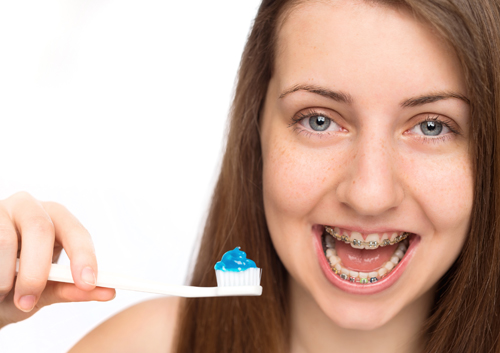
You've made an investment on spending money on getting braces, so why not keep your teeth in good health while undergoing orthodontic treatment? Dr. Karen Seder and our team at Seder Orthodontics will tell you it is just as important to develop a regular hygiene routine while you're wearing braces as you did before proceeding with treatment.
Flossing is essential to the health of your teeth and gums when you're wearing braces. Because braces may hold food, sugars and liquids upon eating, it is very important to keep on top of your brushing and flossing, as well as visiting our office for regular adjustments.
While we know it's tough enough to get kids to floss daily without braces, that battle becomes even tougher when braces are involved. Remember that by not flossing, you will become more prone to cavities and gum disease during your treatment.
When flossing, remember to gently massage your gums in between the teeth. You will find that flossing with braces takes extra time, as you will have to weave the floss through each bracket. When flossing, there should be no signs of blood. If you see blood, you are not flossing enough or properly.
Using an electric toothbrush is also a good idea to massage your gums before or after flossing as electric toothbrushes can help remove any harmful bacteria that are lingering in your mouth. And don't forget to add a mouthwash to your routine to break up any bacteria that has formed. A good mouthwash will help keep your teeth and gums in good shape during your treatment.
If you have any questions about flossing or your orthodontic treatment at Seder Orthodontics please don't hesitate to give us a call or during your next adjustment appointment!
September 18th, 2019

Also known as onchophagia, the habit of nail biting is one of the so-called “nervous habits” that can be triggered by stress, excitement, or boredom. Approximately half of all kids between the ages of ten and 18 have been nail biters at one time or another. Experts say that about 30 percent of children and 15 percent of adults are nail biters, however most people stop chewing their nails by the time they turn 30.
Here are four dental and general reasons to stop biting your nails:
1. It’s unsanitary: Your nails harbor bacteria and germs, and are almost twice as dirty as fingers. What’s more, swallowing dirty nails can lead to stomach problems.
2. It wears down your teeth: Gnawing your nails can put added stress on your pearly whites, which can lead to crooked teeth.
3. It can delay your orthodontic treatment: For those of our patients wearing braces, nail biting puts additional pressure on teeth and weakens roots.
4. It can cost you, literally: It has been estimated that up to $4,000 in extra dental bills can build up over a lifetime.
Dr. Karen Seder and our team recommend the following to kick your nail biting habit:
- Keep your nails trimmed short; you’ll have less of a nail to bite.
- Coat your nails with a bitter-tasting nail polish.
- Ask us about obtaining a mouthguard, which can help prevent nail biting.
- Put a rubber band around your wrist and snap it whenever you get the urge to gnaw on your nails.
- Think about when and why you chew your nails. Whether you are nervous or just bored, understanding the triggers can help you find a solution and stop the habit.
- If you can’t stop, behavioral therapy may be an effective option to stop nail biting. Ask Dr. Karen Seder and our team for a recommendation.