August 18th, 2015

A lot of patients ask us why Dr. Karen Seder and our team at Seder Orthodontics work tirelessly to give our patients straight teeth. Of course it’s nice to have a smile full of evenly-aligned teeth, but did you know that straightening your teeth can keep them healthier as well? Straight teeth lead to better oral hygiene, increasing your chances of keeping your own natural teeth for a lifetime!
Straight teeth are also less prone to decay, because they collect less plaque, that sticky colorless substance that forms on our teeth. When you visit Seder Orthodontics for your initial consultation, Dr. Karen Seder will examine all aspects of your teeth, face, smile, and jaw.
If you’re wondering whether your teeth might cause problems because they are out of alignment, please give us a call to set up an initial orthodontic consultation at our convenient Chicago, IL office. Dr. Karen Seder can help you decide whether or not you will benefit from orthodontic treatment.
Questions? Give us a call, ask us below or on our Facebook page!
August 11th, 2015
Get excited! Team Seder shirts are in, and they’re for sale here in the office for $15 each! We have sizes S through 2XL available – first come, first serve!
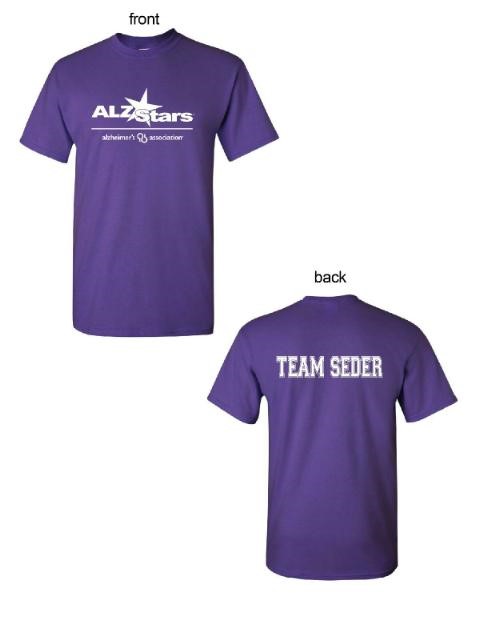 Dr. Seder and her husband, Dan, are running the distance with the Alzheimer’s Association ALZ Stars, a program to advance the care, support, and research efforts of the Association!
Team Seder is running this race to raise money in memory of Dr. Seder’s grandmother, Pearl Abrams, who passed away in 2013 after a battle with Alzheimer’s. We’ve made it a goal to raise at least $3,000 for the Alzheimer’s Association before the event in October. Patients who buy shirts or donate to the cause will earn 50 points on their rewards cards! All money from the sale of the shirts will be donated to ALZ Stars fund also!
Thank you in advance for your generosity – together, we can outrun Alzheimer’s disease! Dont forget to wear your shirt and join all of us at the finish line on October 11th!!!
If you have any questions please contact Christi!
GO TEAM SEDER!!!
August 11th, 2015

Those challenging teenage years are some of the most self-conscious ones of your life, and concern for your appearance definitely plays a large part. Invisalign is becoming a very popular choice for adolescent patients today, but is it the best choice?
The results from teenage Invisalign users indicate that Invisalign is both effective for teeth straightening and for satisfying that urge to avoid the dreaded “metal mouth.” Dr. Karen Seder can help you determine if Invisalign is right for you, but this article will explain why so many people are calling Invisalign the best choice for teens today.
Metal-Free Braces
Invisalign is a clear plastic device that fits directly over the teeth. There are no metal parts to mar the look of your smile, and your Invisalign aligners can straighten while allowing your pearly whites to shine through. Any teen will be the first to tell you that appearance is a top concern, so this is an excellent choice. People don’t even need to know you’re straightening your teeth with Invisalign.
Eat, Brush, and Floss Easily
Another particularly attractive aspect of Invisalign for most teenagers is the freedom it allows. While traditional metal braces can make eating, brushing, and flossing difficult, this is not the case with Invisalign. The aligners are easily removable for these activities, which gives teens the freedom they desire to live life as usual.
More Free Time
Invisalign Teen aligners need to be checked and adjusted at Seder Orthodontics less frequently than traditional braces. This allows for fewer appointments, something that is really important to teens. Having your teeth straightened is no reason to forgo activities or make room in your schedule for constant office visits when you choose Invisalign.
Learn more about Invisalign Teen at our Chicago, IL office!
August 4th, 2015

Braces can be painful, but if you are a teen who loves being social, the worst part about them can be their look. They show up in your photos, and you will not be able to take braces-free photos for several months, or even years. The time will pass, though, and your teeth will be the better for it. In the meantime, consider the other people who have survived braces.
Plenty of People Get Braces
There are many reasons for getting braces:
- Correct an overbite or underbite
- Straighten teeth
- Fix poorly-spaced teeth
With so many possible ways to get braces, it’s no surprise that they are so common.
Find Out Who Had Braces
The long lists of celebrities who had braces as teenagers or even adults can give you the comfort of knowing you are in good company. Even better, these lists provide visible proof that there is life on the other side of braces. Actors and actresses on the Cosby Show, Scrubs, and Ugly Betty, as well as tennis star Martina Hingis and Miss America 1975, Shirley Cothran, had braces. Ask your parents. If they didn’t have braces, there is a good chance that some of their siblings did.
Benefits of Braces
Wearing braces can make your life a lot better in the future. Your teeth will be more attractive, and your smile will shine through in photos of you. Straight teeth are not just about looks, though. They can prevent a variety of health problems, such as caries, gum disease, speech impairments, and trouble chewing. Be patient, and the benefits of braces will come.

 Website Powered by Sesame 24-7™